

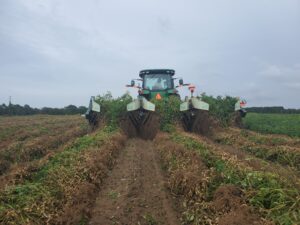
Improper setup and operation of the harvest equipment and prevalent crop and field conditions can incur losses during peanut harvest.
Tips for proper setup and operation of peanut inverter
Peanut harvest will soon be underway. With high input prices and low commodity prices continuing to challenge profitability, one of the most important recommendations for growers is to devote time and effort to ensuring that every piece of harvest equipment is properly maintained, correctly adjusted and operating at peak performance.
When it comes to the peanut harvest, most losses occur during digging and can result in significant yield reductions if not addressed appropriately. Hence, the proper setup and operation of the peanut-digger-shaker are important for minimizing losses and ensuring optimal equipment performance and efficiency during harvest.
There are many mechanical parts, and hence the adjustments required on the peanut digger-shaker-inverter are critical, as even a small misalignment or improper adjustment can result in poor equipment performance and increased digging losses.
Growers should consider the following recommendations to ensure proper digger setup and operation, and minimize mechanically induced yield losses during peanut digging.
• Prior to harvest, inspect the digger carefully for any broken, bent or missing parts as well as the sharpness of the blades. Make adjustments during harvest as needed based on harvest conditions. Dull blades fail to cut the tap root resulting in dragging roots or dislodging pods from the plant.
• Check that the tractor tires and the digger’s rear gauge wheels are inflated to the recommended pressure and that the pressure is equal on both sides. It is also important to ensure that the tires on both the tractor and the digger are the same size.
• Use the top link to adjust the digging angle, which sets the digging depth. Digger blades should be set at a slight forward pitch and at the depth where they cut the tap root just below the pod zone. Both excessively shallow and deeper depths can result in significant digging losses.
• Blade angle (digging depth) is also dependent on soil type and texture. Any significant change in soil type within or among the fields will require an adjustment to the digging angle, as clay soils usually require a more aggressive angle, whereas sandy soils require a less aggressive angle.
• Tractor speed also affects digging losses and therefore should be optimized based on the prevalent in-field conditions at harvest. Generally, the optimal ground speed for digging peanuts is between 2.5 and 3.5 mph. Speeds above 3.5 mph can increase digging losses and should therefore be avoided.
• The rattler conveyor speed also needs to be adjusted so it matches or is just slightly above the forward travel speed of the tractor while digging peanuts. Conveyor speeds slower or faster than the tractor speed can increase pod losses.
• The conveyor depth should also be adjusted where it picks up vines with its teeth, just clearing the soil. Additionally, as needed, the knocker wheels need to be adjusted up or down to regulate the amount of shaking that is enough to remove the soil from the vines.
• While there is not much technology involved in peanut harvest, the most important one is the RTK-enabled GPS guidance system (auto-steer) on the tractor. Previous research has shown that using an auto-guidance system while digging peanuts can reduce yield losses by up to 10 percent compared with digging without it. Thus, peanut growers should definitely consider using or investing in an auto-steer system if they haven’t already.
Most of the points listed above can be addressed during a pre-inspection of the digger before heading out into the field. This also helps reduce downtime during harvest and enables growers to make any necessary repairs before major breakdowns or issues in the field.
Properly dug and inverted peanut plants should form a uniform, fluffy and well-aerated windrow with few pods touching the soil. Because field and harvest conditions can change throughout the day, growers should continuously monitor digger performance and make adjustments to mechanical and operational settings as needed. Growers should also consult their digger’s operator’s manual for additional settings that may seem minor but can play an important role in minimizing harvest losses.
Listed below are several key areas to monitor when evaluating digger performance or troubleshooting issues in the field:
• Blade depth too shallow.
• Dull blades. Blades are dull when they do not cut cleanly through the taproot and start dragging the plants.
• Vine cutter springs too loose or coulters too dull.
• Conveyor pickup running too high above the lifter rods.
• Tractor RPM or hydraulic flow is too fast.
• Vine flow not synchronized with ground speed and conveyor speed.
• Inverter not precisely aligned with the row (indicated by tap roots leaning left or right).
By Simerjeet Virk and Kris Balkcom
Auburn University