
Experts urge peanut growers to focus on fundamentals
After a relatively mild disease year in 2025, peanut growers across the Southeast may face a different environment heading into 2026. While last season’s dry conditions helped suppress several major diseases, experts warn that warmer temperatures and potentially wetter periods during key parts of the growing season could increase pressure from common peanut pathogens.
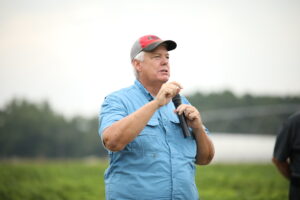
Bob Kemerait
University of Georgia
Extension Plant Pathologist
Plant pathologists Bob Kemerait with the University of Georgia and Amanda Scherer with Auburn University say the key to managing disease in the upcoming season will be combining good planning with careful attention to the details of crop management.
“Growers sometimes feel like they did everything right and still end up with disease problems,” Kemerait says. “When that happens, the answer is usually in the details—how the program was applied, when it was applied, and what level of risk the field already had.”
Both experts agree that variety choice remains one of the most effective disease management tools available to growers.
Several modern peanut varieties offer improved resistance to multiple diseases, particularly tomato spotted wilt. Among the strongest options is Georgia-12Y, which consistently ranks among the most tolerant varieties in regional trials. A newer variety, Arnie, has shown similar tolerance levels in early evaluations.
Other varieties considered moderately tolerant include AU-17, Georgia-06G and TifNV-HG. More susceptible varieties, such as FloRun 331 and Georgia-09B, carry significantly higher risk under heavy disease pressure, especially when planted early.
To help growers evaluate those risks, researchers recommend using Peanut Rx, a widely used decision tool that assigns risk points based on variety, planting date, row pattern, insecticide use and other management factors.
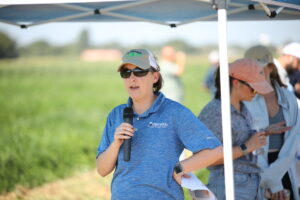
Amanda Strayer-Scherer
Auburn University
Extension Plant Pathologist
“It’s a really valuable, unbiased tool for growers,” Scherer says. “It helps them understand the level of disease risk they’re starting with before they ever plant the crop.”
Tomato spotted wilt pressure varies widely from year to year, but planting date and insecticide choice can significantly influence risk.
Peanuts planted early—especially during peak thrips activity—are generally more susceptible to the virus. Using certain in-furrow insecticides can also affect risk.
Crop Rotation Still Critical
Kemerait stresses that despite advances in genetics and fungicides, basic crop rotation remains one of the most powerful disease management tools. Fields planted in peanuts consecutively often experience higher disease pressure, particularly from soilborne pathogens like white mold.
“If you’ve got a field that’s had problems with white mold in the past, the best thing you can do is rotate away from peanuts for two or three years,” Scherer says.
Non-host crops such as cotton, corn or grain sorghum can help reduce the survival structures of the white mold pathogen in the soil.
Timing and Application Details
Modern peanut fungicide programs are highly effective, but Kemerait warns they must be matched to the disease risk of each field.
“In peanuts, fungicides almost always pay when pressure is high,” he said. “But the program has to reflect the risk you’re under.”
Under heavy white mold pressure, some fungicides consistently provide stronger control than others. However, Kemerait adds that even the best fungicide program can fail if application details are overlooked.
According to Kemerait, common problems include starting fungicide programs too late, falling behind schedule due to weather, poor spray coverage, excessive sprayer speed, applying fungicides to wet foliage and insufficient drying time.
White mold management requires precision because fungicides must reach the crown of the plant where infection occurs. Rainfall or irrigation shortly after application can improve control by washing fungicide into the canopy and soil.
Research has shown that rainfall within roughly 72 hours after application can help move fungicide into the soil where the pathogen is active.
For leaf spot diseases, Scherer says the fundamentals remain the same. Fungicide programs should begin 30 to 45 days after planting and continue a regular schedule. Preventative applications are far more effective than trying to control disease after it becomes established.
Varieties with improved tolerance can also reduce the number of fungicide applications needed, particularly in high-pressure areas. In some trials, simply planting a leaf spot-tolerant variety increased economic returns by more than $300 per acre, even before fungicides were considered.
Another issue growers should watch in 2026 involves potential changes to the widely used fungicide Chlorothalonil. Regulatory changes are expected to reduce the maximum seasonal use rate in peanuts by about 25 percent in the near future, limiting growers to six applications at 1.5 pints per acre instead of the previous eight.
Keep Expectations Realistic
Finally, Kemerait reminds growers that a successful disease program does not mean eliminating every symptom in the field. Small, isolated infections late in the season may have little impact on yield. The real goal is to prevent disease from spreading across the field.
“We don’t have to be perfect,” Kemerait says. “What we want is a program that keeps disease from turning into something that hurts yield.”
Growers may need to rely heavily on proven management strategies which means combining resistant varieties, crop rotation, risk assessment tools like Peanut Rx and well-timed fungicide programs.
“When growers feel like they threw everything at a problem and still had disease,” Kemerait says, “a lot of times the answer is simply that the details mattered more than we realized.”
By Joy Crosby